PROCESS SCIENCE
What is inside a tyre?
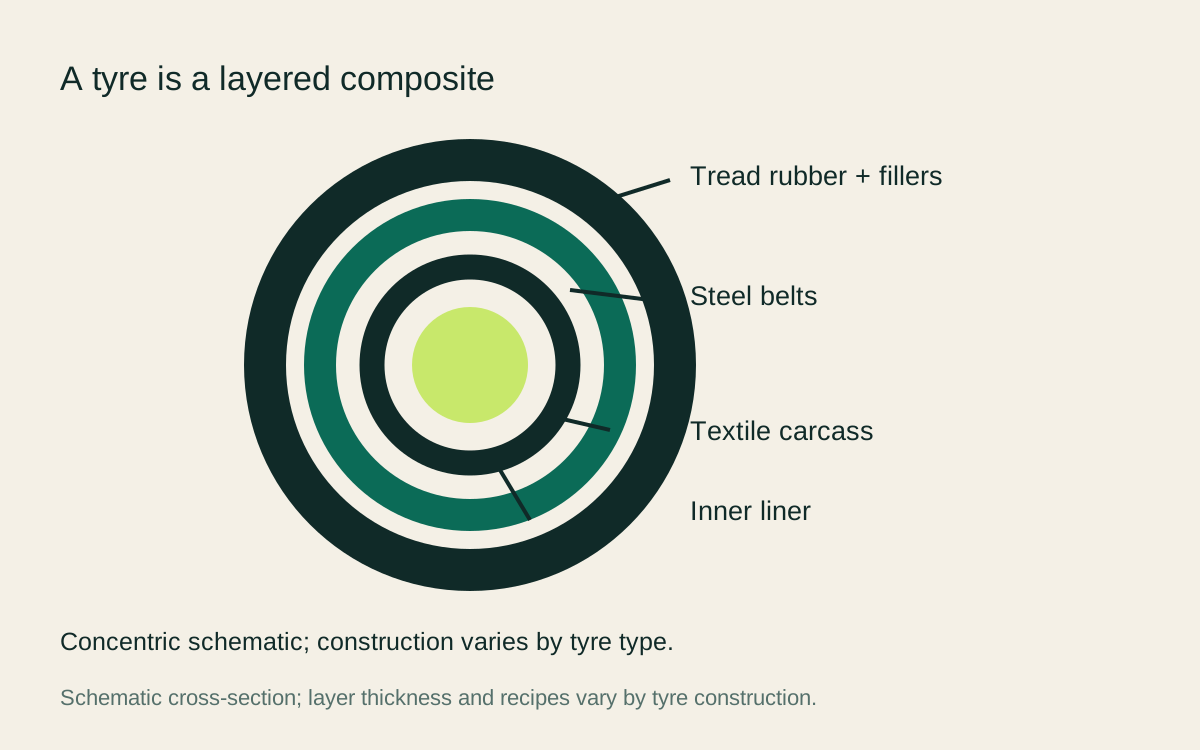
A vehicle tyre is a layered composite, not a lump of rubber. Elastomers provide stretch and recovery; steel carries tension; textile cords support shape; carbon black and silica tune wear and stiffness; oils, resins, zinc oxide, sulphur and curing chemicals control manufacture. The exact recipe changes with tyre type and manufacturer. That variation is why a pyrolysis operator needs feed characterisation instead of relying on one textbook composition.
The polymer matrix
Natural rubber is common in heavy-duty and truck applications because it handles repeated deformation well. Synthetic rubbers such as styrene-butadiene and butadiene rubber are used where abrasion, rolling resistance or temperature behaviour calls for a different balance. Butyl rubber is used in inner liners because it slows air diffusion. These polymers are vulcanised: sulphur bridges connect chains into a durable network. Those bridges give a tyre resilience, but they also mean the material does not simply melt and flow like an uncured plastic.
Heating breaks the network progressively. Rubber-derived vapours form much of the liquid and gas fraction, while carbon black and mineral matter remain largely in the solid fraction. The polymer mix affects the shape of the vapour spectrum, so a passenger tyre and a truck tyre can produce different oils under the same nominal reactor temperature.
References: 1
Reinforcement and fillers
Steel cords sit in belts and beads, where they carry tensile loads and help a tyre keep its geometry. Textile fibres, often polyester, nylon or rayon, appear in carcass and cap layers. Their amount depends strongly on construction. Steel is valuable only after it has been separated, cooled and checked for rubber and ash contamination. A feed audit that ignores reinforcement can overstate the amount of organic material available for conversion.
Carbon black is a finely divided carbon filler. It improves wear resistance, strength and protection from ultraviolet light. Silica is used in some tread compounds and changes ash chemistry. Zinc oxide, clay and other inorganic ingredients do not become hydrocarbon oil during pyrolysis. They concentrate in the solid residue and can affect ash content, leaching behaviour and downstream material qualification.
References: 2
Small ingredients with large process effects
Sulphur, accelerators, antioxidants, antiozonants, plasticising oils and resins are present at lower concentrations than rubber, but they matter. Sulphur compounds can appear in gas, oil and char. Zinc-containing compounds can remain in the solid. Nitrogen-containing additives can affect nitrogen species in the vapour. These are reasons to sample products for sulphur, nitrogen, metals and polycyclic aromatic compounds rather than describing oil as a generic hydrocarbon fuel.
Moisture and road dirt are also part of the incoming reality. Water consumes heat and can create a separate aqueous phase or unstable emulsions in condensate. Grit raises ash and wears equipment. Bead wire and embedded objects can damage size-reduction equipment. A receiving specification that checks moisture, foreign material and steel condition can prevent a chemistry problem from becoming a mechanical shutdown.
References: 3
A feed sheet that supports a decision
For a representative feed sample, record tyre class, approximate construction, moisture, steel and textile fractions, ash and polymer identity where available. Keep the basis explicit: wet received mass, dry prepared mass and organic mass are different denominators. If a batch contains many truck tyres, expect a different reinforcement and rubber balance from a batch of passenger tyres.
A feed description needs more detail than the word ‘tyre’. Before comparing reactor trials, make the feed descriptions comparable. If the goal is recovered carbon, test ash and zinc as early as carbon content. If the goal is liquid fuel, test the condensate rather than inferring quality from rubber content. Composition is the starting condition for every later process claim.
Sampling needs the same care as the recipe. Take increments from different parts of a delivery and combine them according to a written method; one clean sidewall is not a representative tyre. Retain a sealed sample with its date, source class and preparation record. When an oil or char result looks unusual, the retained feed sample lets a laboratory check whether the change began in the tyre pile or in the reactor.
Sources and further reading
Sources support the principles discussed here. Worked examples and decision checklists are explanatory; they do not report ENVIROPYROFUEL plant performance or product specifications.
- Michelin: tyre materials and their functions
- Continental: tire components and construction
- Effect of high heating rates on products distribution and sulfur transformation during the pyrolysis of waste tires
Apply testing, handling and operating decisions to the actual material, equipment and local requirements. A standards reference identifies a method or framework; it does not establish certification.