MATERIAL QUALITY
Upgrading tyre char: a staged route to a specified material
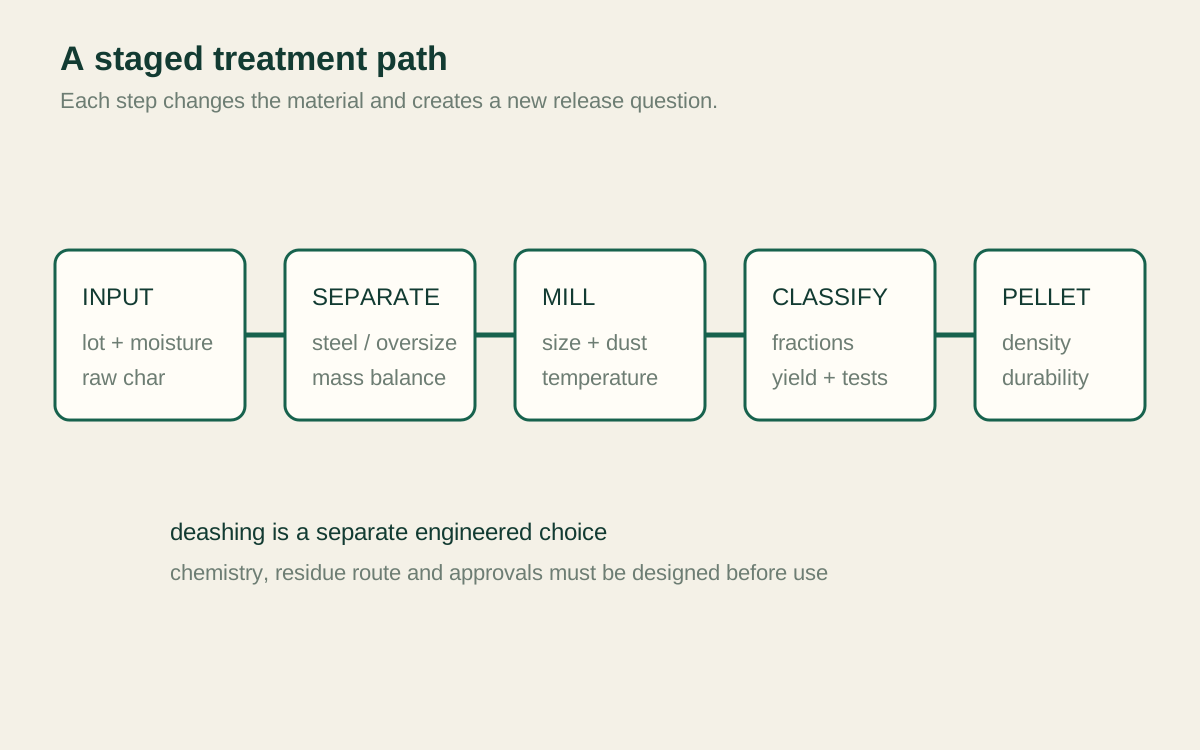
Tyre char becomes more useful when each processing step answers a customer requirement. Milling, deashing and pelletising change handling and composition, but they do not remove the need for lot testing and application qualification.
Start with the customer’s job
Upgrading should begin with a specification, not a machine. A rubber compounder may need controlled particle size, low metal, predictable ash and dispersion data. A fuel or thermal user may care about moisture, fixed carbon, heating value and dust control. A pellet buyer may need a defined diameter range, bulk density, durability and a binder statement. These are different products even when they start with the same reactor char.
The first material check is identity and mass balance. Record the input lot, retained metal, fines, moisture and any stored material blended into the run. Weigh saleable and off-grade fractions. Yield matters because a low ash fraction produced from a small part of the feed is not equivalent to the original char stream.
The process should have a safe dust and fire assessment. Fine carbonaceous powders can create combustible dust and handling hazards. Equipment selection, extraction, housekeeping, ignition control and operator training belong to the site’s engineered safety system. This article is a product-quality guide, not an operating or maintenance procedure.
| Stage | Potential change | Evidence to release |
|---|---|---|
| Separation | Removes steel or oversize foreign material | Metal, oversize and mass-balance records |
| Milling | Changes particle-size distribution and flow | Size analysis, temperature and dust controls |
| Deashing | Reduces selected inorganic content if the process supports it | Ash before/after, process record and waste route |
| Classification | Splits fractions for different applications | Fraction identity and yield |
| Pelletising | Improves storage, feeding and dust handling | Size, durability, density, binder and moisture |
| Release testing | Checks the named grade | Lot certificate against customer limits |
Milling and classification change the physical product
Milling can reduce coarse pieces and make a more consistent feed, but it can also expose metal, generate heat and increase airborne fines. The target particle-size distribution should come from the customer’s process. “Fine” is not a specification. Use a named measurement method and report the sieve or instrument range, sample preparation and result basis.
Classification can separate coarse metal-bearing pieces, fine carbon-rich material and other fractions. Keep each fraction traceable. Blending classified fractions after testing may change the product again, so the blended lot needs its own identity and release decision.
A laboratory or process engineer can select a particle-size method suitable for the range and material. Surface area, structure and morphology may matter for reinforcement or adsorption, but these tests are application-dependent. ISO 9277’s BET method measures specific surface area by gas adsorption; it does not by itself establish dispersion, grade or performance.
Dust extraction and housekeeping need to match the equipment. Carbon powder around bearings, heaters or electrical equipment can create a serious incident. The safe route is a site-specific hazard review and approved operating controls.
Deashing and pelletising need a defined boundary
Deashing can mean physical separation, a thermal step or a chemical process. The selected route depends on the ash components, target reduction, waste stream, equipment and local approvals. A lower ash result is useful only when the method is comparable and the resulting product remains suitable for its application. The removed fraction needs identification, containment and an authorised destination.
This article intentionally gives no acid or chemical recipe. Such work requires process design, compatibility review, exposure controls, wastewater or residue management, permits and qualified operators. A chemistry that reduces one mineral may add another impurity or create a new waste stream.
Pelletising can reduce dust and improve feeding, but a pellet is a reformulated product. Binder choice can affect ash, sulfur, emissions, storage, water resistance and downstream performance. Record the binder identity and loading where commercially and technically relevant. Test pellet size, bulk density, durability, moisture and re-dispersibility against the buyer’s need.
After each meaningful process change, test the prepared lot. Retain pre-process and post-process samples when possible. The comparison should show what changed, at what yield, and whether the customer’s acceptance test passed.
Example: choose the shortest defensible route
A buyer wants a low-dust carbon material for an automated feeder and has supplied a maximum ash limit, a particle-size window and a pellet durability requirement. The sensible route may be separation, controlled milling, classification and pelletising, with ash and size measured before and after. If ash remains above the limit, the supplier should stop and discuss whether a deashing process is justified. Adding an unplanned chemical step would change the product, waste route and approvals.
A different buyer wants a powder for a rubber trial. Pelletising may make no sense if the pellets cannot redisperse in the compound. The right route could be metal separation and classification followed by a laboratory dispersion trial. The customer’s test decides whether the material works.
The release record should name the input lot, process steps, yield, test methods, basis, deviations and intended application. A grade claim belongs to the tested prepared material, not to all char from the plant.
- Set the end-use specification before selecting equipment or chemistry.
- Keep fractions and waste streams traceable through every stage.
- Treat chemical deashing as an engineered process requiring qualified review and approvals.
- Retest after milling, blending, deashing or pelletising changes the material.
Sources and further reading
Sources support the principles discussed here. Worked examples and decision checklists are explanatory; they do not report ENVIROPYROFUEL plant performance or product specifications.
- ISO 9277:2022, Specific surface area of solids by gas adsorption, BET method
- US OSHA, Combustible dust safety and health topics
- ASTM D6556, Carbon Black — Total and External Surface Area by Nitrogen Adsorption
Apply testing, handling and operating decisions to the actual material, equipment and local requirements. A standards reference identifies a method or framework; it does not establish certification.