
MATERIAL QUALITY
Tyre pyrolysis oil properties: how to read the evidence
Tyre pyrolysis oil is a variable recovered liquid. Its colour or ability to burn says little about whether it fits a particular burner, boiler, engine or chemical process.
Start with the intended use
A buyer should name the use before asking whether an oil is good. A furnace operator may care about water, sediment, viscosity at the pump temperature, flash point, sulphur and net heat. A chemical user may need a boiling-range cut and composition information. An engine application has a much wider set of fuel, storage, injection and emissions requirements. The same tank can be acceptable for one controlled industrial duty and unsuitable for another.
Tyre feed, reactor operation, condensation and storage all affect the result. A batch may contain light and heavy hydrocarbons, water and suspended solids. Settling or filtration can change the sampled liquid, so a report should identify whether it describes crude oil, a settled layer, a filtered sample or an upgraded fraction. The report should also state the batch or lot and collection date.
The review by Martínez and colleagues describes how feed and process conditions affect tyre pyrolysis products. That is a useful reason to treat a product sheet as batch evidence rather than a permanent property claim.
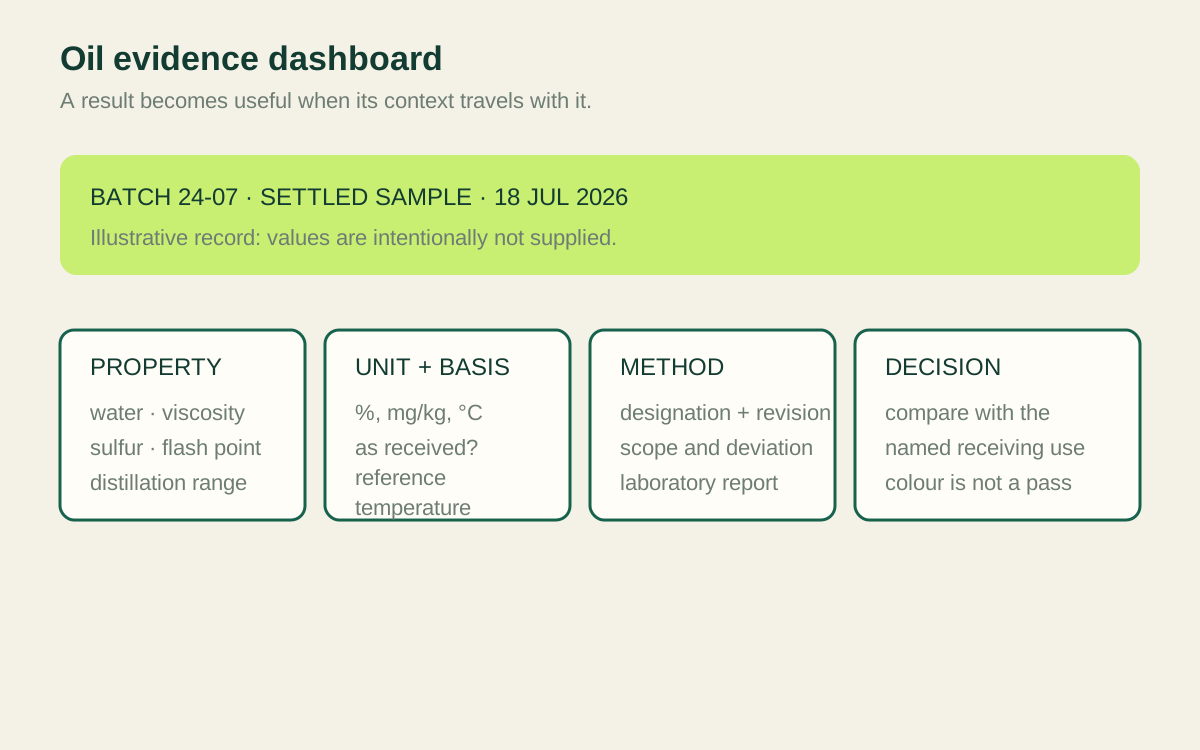
The first decision is therefore a comparison: measured value, named method, sample identity, buyer limit and any conditioning step must refer to the same material. A number without that chain is a weak basis for a purchase.
| Property | What it tells you | Question before comparison |
|---|---|---|
| Water and sediment | How much non-hydrocarbon material is present | Was the sample mixed, settled or filtered? |
| Viscosity | How the liquid flows at a stated temperature | Does the receiving system operate at that temperature? |
| Flash point | A measured ignitability characteristic under a specified method | Which method and closed/open cup basis were used? |
| Sulphur | Sulphur concentration on the reported basis | What permit, fuel specification or equipment limit applies? |
| Distillation range | How the sample volatilises through a test procedure | Is the method suitable for this material and use? |
Why one number cannot make a fuel promise
A high heating value does not settle handling or emissions questions. Water and solids can reduce delivered energy and foul equipment. Sulphur can affect corrosion, flue-gas treatment and the permitted use. Viscosity is temperature-dependent, so a value without its test temperature cannot predict pump behaviour. Flash point is a laboratory result under a defined procedure; it is not a complete storage or fire-risk assessment.
ASTM D86 explains that distillation data describe boiling-range characteristics and can affect safety and performance. Its scope is directed at distillate fuels and excludes products with appreciable residual material. A heavy tyre-derived liquid may therefore need a laboratory and buyer to confirm that a proposed method is applicable before treating a result as comparable to a conventional distillate.
The useful output of testing is a decision record. It says what was tested, how it was tested, which specification was used, and what follow-up is needed. “Fuel oil” on a label is not a universal grade or permission to use the material in an engine.
A laboratory should receive the intended specification and handling information before testing. That lets it flag an unsuitable method, preserve the sample properly and report deviations. A customer should ask for the full report and relevant chromatographic or physical data when the end use needs them, rather than relying on a single headline value.
- Record the product description, batch or lot, sample date and storage history.
- Request units, test basis, method designation and any method revision shown on the report.
- Compare each result with the receiving process and the applicable local specification.
- Treat colour, odour and a simple burn test as observations, not qualification.
A worked purchasing decision
Suppose a heat user receives a report for a settled tank sample. The report gives viscosity at 40 °C, water by a named method, sulphur in mass percent and a flash point, but the buyer’s burner specification is written for a different viscosity temperature and has a separate sediment limit. The right action is to ask the laboratory or supplier to align the methods and sampling description. It is premature to say the oil passes because three values look familiar.
If the aligned results fit the receiving specification, the next check is operational: transfer route, tank compatibility, heating requirement, filtration, combustion controls and permitted fuel status. If they do not fit, the material may need treatment, blending under an approved procedure or a different authorised outlet. That is a commercial and engineering decision for the parties involved.
Any suitability statement should remain tied to the tested grade, batch and customer specification.
Sources and further reading
Sources support the principles discussed here. Worked examples and decision checklists are explanatory; they do not report ENVIROPYROFUEL plant performance or product specifications.
- Martínez et al., Waste tyre pyrolysis: A review
- ASTM D86, Distillation of Petroleum Products and Liquid Fuels
- ASTM D445, Kinematic Viscosity of Transparent and Opaque Liquids
- ASTM D4294, Sulfur in Petroleum and Petroleum Products by Energy Dispersive X-ray Fluorescence
Apply testing, handling and operating decisions to the actual material, equipment and local requirements. A standards reference identifies a method or framework; it does not establish certification.