MATERIAL QUALITY
Representative oil sampling for tyre pyrolysis batches
A laboratory result is only as useful as the sample behind it. Representative oil sampling links a reported value to a defined batch, container and intended decision.
Define the population first
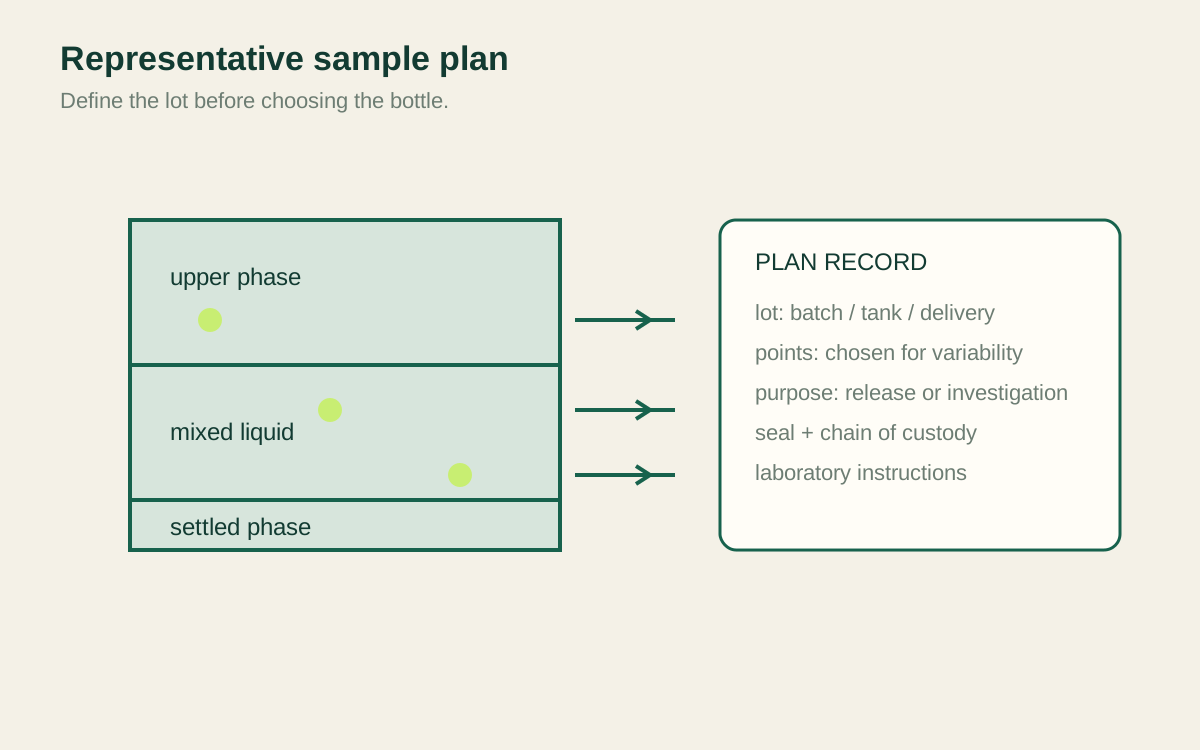
“The sample” has no meaning until the lot is defined. A lot might be one reactor batch, a tank filled from several batches, or a delivery assembled from more than one container. Those choices answer different questions. A single container sample can describe that container. It cannot automatically describe every tank or every future production run.
The US Environmental Protection Agency says a representative sample is expected to exhibit the average properties of the universe or whole being sampled. Its SW-846 sampling-plan guidance starts with data-quality objectives, then considers the material, variability, decision and acceptable uncertainty. Those principles apply to commercial quality work even when the work is not a regulatory waste determination.
A sampling plan should name the lot, boundaries, number of containers or points, timing, equipment, sample volume, preservation, mixing approach, chain of custody and laboratory methods requested. It should also record exclusions such as water bottoms, settled solids or damaged containers. An exclusion can be valid, but it changes what the result represents.
| Question | Why it matters | Record |
|---|---|---|
| What is the lot? | Sets the population the result may represent | Batch IDs, tank or container IDs |
| Where can variability occur? | Oil can differ by time, level and phase | Locations and timing selected |
| What is the decision? | Sets the required precision and tests | Release, purchase, troubleshooting or compliance |
| How will the sample travel? | Light ends, water and solids can change | Container, seal, temperature and dispatch time |
| Who receives it? | Protects traceability and accountability | Chain-of-custody names and timestamps |
Plan for phases and variability
Recovered oil can contain liquid hydrocarbon, water and suspended or settled material. A plan that samples only a clear upper layer may answer a “clear upper layer” question, not a whole-lot question. A plan that intentionally combines increments can estimate an average, but it can also hide a bottom phase that the receiving equipment must handle. The choice belongs in the written objective.
EPA Chapter Nine says the sampling plan should be designed around the data-quality objectives and the properties of the waste or material. It also distinguishes sampling design from the later laboratory method. A sampler cannot repair an undefined lot by sending more bottles to a laboratory.
Commercial sampling should be performed by trained personnel under the site’s safety procedures. Tyre pyrolysis oil can be hot, volatile and combustible, and its composition is not known from appearance. This article does not provide a hazardous-material collection procedure. Site operators should use their risk assessment, suitable equipment, competent personnel, local requirements and the laboratory’s instructions.
If sampling a process tank, note whether recirculation or mixing occurred and when. If sampling a delivery, retain the seal number and link the sample to the vehicle, tank or container. If a sample is composited, retain the individual increments or a documented rationale where retention is impractical.
Ask the laboratory to protect the question
Send the laboratory the material description, expected hazards, requested tests, lot definition and required reporting basis. Ask whether the requested methods are suitable for a variable tyre-derived liquid and whether the sample container, preservation and holding time are appropriate. The laboratory may recommend separate portions for water, volatiles, metals or sulfur. That is a method decision, not a sign that the sample plan failed.
Keep a field record with the date, weather where relevant, source, point, operator, appearance, temperature if safely measured, container condition and any deviation. The report should carry a unique sample identifier and laboratory receipt condition. A result with a broken seal, unknown delay or visible phase separation should be qualified before use.
Repeat sampling when the decision is material and variability remains unresolved. More tests on one unrepresentative bottle are not the same as better evidence. A buyer can request an agreed release plan, such as testing each batch initially and moving to a defined frequency only after the process demonstrates stable results.
The practical output is a traceable evidence package: sample plan, field record, chain of custody, laboratory report and comparison to the agreed specification. That package supports a sensible conversation about acceptance, retesting or a different outlet.
- State whether the result represents a batch, tank, delivery or a particular phase.
- Use the laboratory’s written instructions for containers, preservation and transport.
- Record deviations and sample condition instead of silently correcting them in a spreadsheet.
- Do not use an informal DIY sample as evidence for a hazardous or regulated decision.
Sources and further reading
Sources support the principles discussed here. Worked examples and decision checklists are explanatory; they do not report ENVIROPYROFUEL plant performance or product specifications.
Apply testing, handling and operating decisions to the actual material, equipment and local requirements. A standards reference identifies a method or framework; it does not establish certification.