
MATERIAL QUALITY
Reading a certificate of analysis for recovered materials
A certificate of analysis is a record for a defined sample. It becomes useful when the reader can trace every result to its batch, method, unit, basis and acceptance criterion.
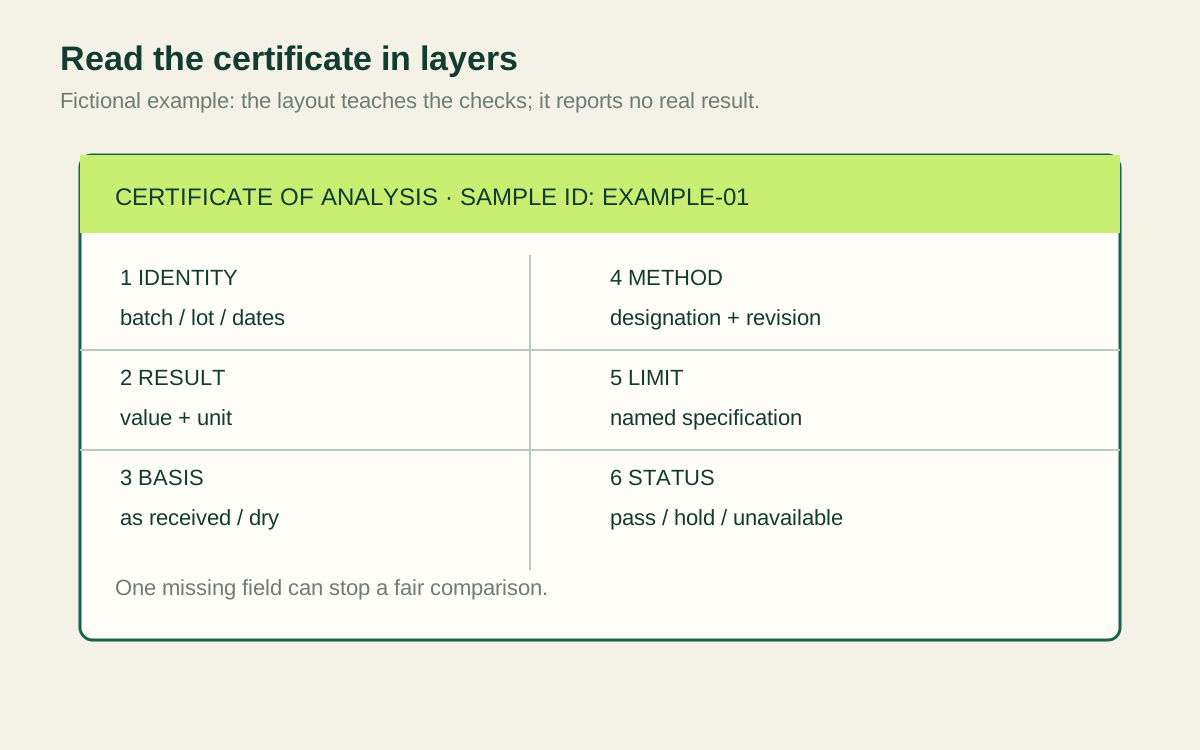
Read the identity block before the numbers
Start with the supplier, laboratory, report number, sample ID, sample description, collection date, receipt date and test dates. Confirm the batch or lot on the certificate matches the purchase, tank, drum or dispatch record. A certificate for “tyre pyrolysis oil” without a lot identifier cannot prove that it describes the current delivery.
Check whether the result is as received, on a dry basis, on a moisture-free basis, on an ash-free basis, by mass or by volume. Basis changes are not cosmetic. A sulfur result of 1.2 percent as received and 1.2 percent dry basis are only equal when moisture is zero. The report should define abbreviations and use consistent significant figures.
Look for qualifiers such as less than the reporting limit, estimated, not detected, outside calibration range, subcontracted, or deviates from the requested method. A non-detect is not proof of zero. A result outside a method range may need a different dilution or method before comparison.
| Field | Check | Why |
|---|---|---|
| Sample identity | ID, batch, lot and description | Prevents applying old evidence to new material |
| Unit | %, mg/kg, g/cm³, MJ/kg, °C or another stated unit | Prevents scale and unit errors |
| Basis | As received, dry, wet, ash-free or volume basis | Determines what denominator was used |
| Method | Designation, revision and deviations | Shows how the value was obtained |
| Specification | Limit, direction, edition and applicability | Defines pass or fail for this use |
| Approval | Authorised signatory and report status | Separates draft data from released data |
Methods are part of the result
A test name is not enough when methods have different scopes. ASTM D86 measures boiling-range characteristics by atmospheric distillation and states that its method is designed for distillate fuels; it is not applicable to products containing appreciable residual material. The method designation therefore helps a reader decide whether a reported distillation curve is comparable to the intended liquid.
For viscosity, density, sulfur, water and ash, the method and sample preparation affect comparability. The same property may have several recognised procedures with different precision statements or applicability limits. A buyer should ask the laboratory to explain a deviation rather than silently equating two rows with similar labels.
The report’s units also need context. Density may be reported at a reference temperature. Viscosity may be reported at a specified temperature. Heating value may be higher or lower depending on the method and water treatment. Compare like with like, and preserve the original unit in the decision record.
An internal spreadsheet can convert units, but it should retain the original value, original basis and conversion formula. Rounding before conversion can create an avoidable discrepancy. When a contract has a stated method, use that method or obtain written agreement to an alternative.
Compare against a real requirement
A certificate does not create a specification. The buyer’s process, contract, permit and equipment determine which limits apply. A report can show measured sulfur and water without proving that the material is lawful or suitable in a particular burner. A report can show a char’s ash value without proving it is recovered carbon black of a target grade.
Use a comparison sheet with one row per requirement: property, certificate value, unit, basis, method, buyer limit, decision and open question. If the certificate has no corresponding result, mark the requirement as unavailable. Do not turn an absent value into a pass.
Consider sample age and storage. Volatile loss, settling, oxidation, moisture exchange and contamination can change a retained sample or a delivery. For a disputed result, agree in advance whether the retained sample, a jointly collected sample or an independent laboratory result governs. Document the chain and laboratory competence expected by the contract.
A useful certificate review ends with a specific decision. The material may be accepted for a named use, held for clarification, retested, conditioned and retested, or directed to another authorised use. The decision belongs to the parties with the relevant technical and regulatory responsibility. Keep the specification edition with the review so a later reader can reproduce the decision; a missing limit is an unresolved question, not a pass. Record the reviewer, date and open questions beside the decision.
- Confirm batch identity before reading performance values.
- Treat units and basis as mandatory fields, not footnotes.
- Check method scope, revision and deviations.
- Separate measured quality from legal permission, safety approval and end-use qualification.
Sources and further reading
Sources support the principles discussed here. Worked examples and decision checklists are explanatory; they do not report ENVIROPYROFUEL plant performance or product specifications.
- ASTM D86, Distillation of Petroleum Products and Liquid Fuels
- US EPA, SW-846 Chapter One: Quality Control
- ISO/IEC 17025, General requirements for competence of testing and calibration laboratories
Apply testing, handling and operating decisions to the actual material, equipment and local requirements. A standards reference identifies a method or framework; it does not establish certification.