
OPERATIONS AND FEEDSTOCK
Tyre storage and handling: plan for heat, access, and response
Stored tyres carry a fire risk that grows with poor access, unmanaged vegetation, delayed detection, and weak response planning. Storage design must be approved for the actual site and jurisdiction; a web article cannot provide a universal legal layout.
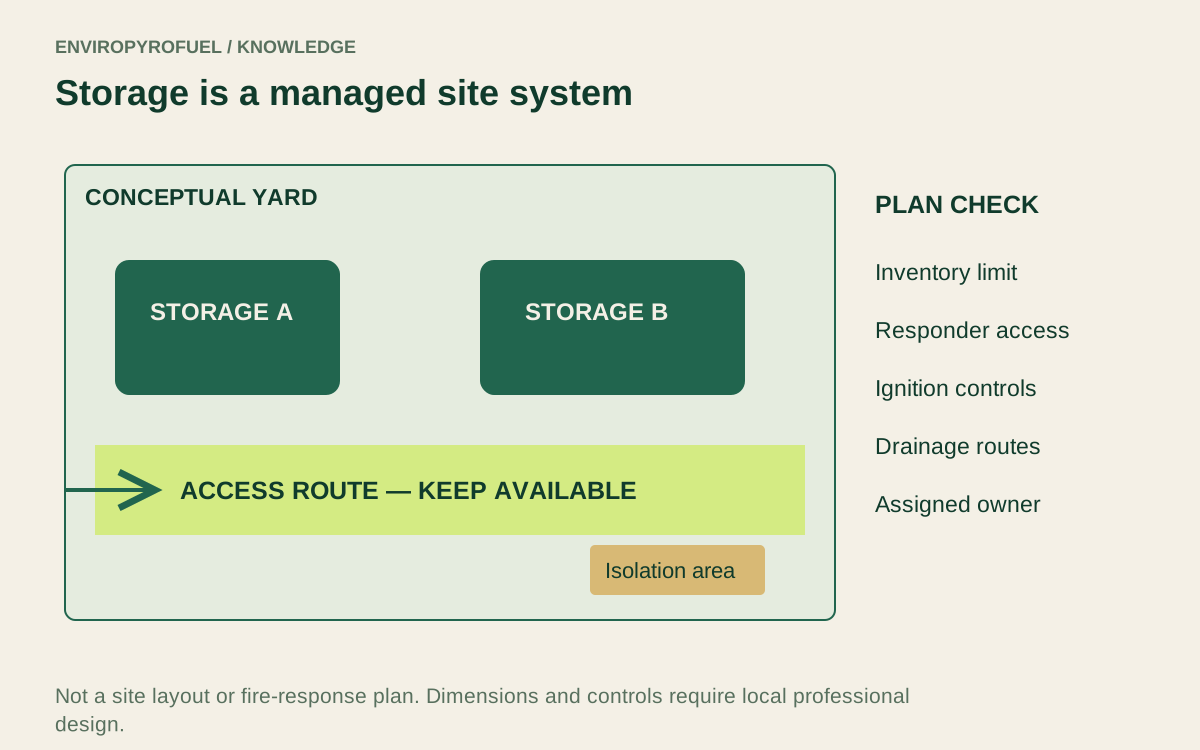
Why storage changes the risk
Tyre piles can sustain severe fires with smoke and contaminated runoff. Archived US EPA guidance documents these consequences and the difficulty of response. The useful lesson for routine operations is to prevent ignition and maintain the site’s planned access and containment arrangements. Fire response itself belongs to trained responders following the local emergency plan.
Risk is shaped by inventory as well as geometry. Record incoming tonnes, pile locations, age, movement, and changes after rain or hot weather. Keep access routes usable for the site's emergency resources. Prevent ignition sources and keep combustible vegetation and loose debris under control according to the approved plan.
Storage should have an operating owner. Someone needs authority to stop deliveries when the approved inventory limit or inspection condition is reached. A plan that exists only in a file and is not used during receiving is not a control.
References: 2
Use a qualified site plan
Setbacks, pile dimensions, fire lanes, water supply, drainage, emergency access, and permitted storage quantities depend on local rules, the site, neighbouring exposures, and response capability. EPA documents reproduce historic guidance with example dimensions, but those figures are not a substitute for current approval. A competent fire-safety or environmental professional should translate the applicable requirements into a signed site plan.
The plan should show the storage footprint, vehicle movement, isolation areas, access for responders, detection and communications, stormwater and fire-water pathways, and the location of equipment. It should state inspection frequency and the trigger for reducing inventory. The operator should exercise the contact and access arrangements with the relevant responders where the law or permit requires it.
Do not bury a damaged, hot, or smoking tyre in a pile. Isolate it under the site's emergency procedure and call the designated response service when required. The correct action depends on the facility's approved controls and trained personnel.
References: 2
Example decision
A site has space for another delivery, but the access lane is partly blocked by a temporary pile. The delivery should wait. The immediate commercial cost is a delayed truck; the operational risk is losing responder access at the moment it is needed. The decision follows the plan's access requirement, not the day's receiving target.
The takeaway is to treat storage as a managed inventory and emergency system. Obtain site-specific approval, maintain the layout, inspect it, and stop intake when the controls no longer match reality. This article gives risk principles, not jurisdictional spacing rules.
References: 2
Plan maintenance
Compare the yard with the approved drawing during inspections. Record blocked access, damaged fencing, ignition sources, and inventory changes, then assign corrections. A stale contact number or locked gate can defeat a sound layout. Treat any change in pile location, roof, drainage, or delivery pattern as a reason to review the plan with the qualified professional responsible for it.
Inventory limits should have an owner and a stop-delivery trigger. If equipment, access, or response arrangements change, pause intake until the approved plan matches the real yard. This is a control decision, not a universal spacing calculation.
References: 2
Make the inspection record usable
A practical inspection record links an observation to a location, a responsible person and a closure check. “Access blocked beside pile B” is more useful than “yard untidy”. Record when the obstruction was found, what receiving activity was stopped and who confirmed that access was restored. A photograph can support the record without replacing the actual inspection.
Consider a hypothetical shift handover. A temporary barrier was moved to admit a truck and has not been restored. The next shift needs that open item, its location and its owner. It should not have to infer the change from yesterday’s drawing. The same principle applies to damaged signs, an unavailable access key or an out-of-service communication device.
These examples concern recordkeeping and follow-through. They do not prescribe firefighting tactics, inventory limits or pile spacing. Those decisions require the current requirements and emergency capabilities of the actual site.
References: 2
Sources and further reading
Sources support the principles discussed here. Worked examples and decision checklists are explanatory; they do not report ENVIROPYROFUEL plant performance or product specifications.
Apply testing, handling and operating decisions to the actual material, equipment and local requirements. A standards reference identifies a method or framework; it does not establish certification.