
BUYING AND CIRCULARITY
Qualifying recovered carbon black for rubber
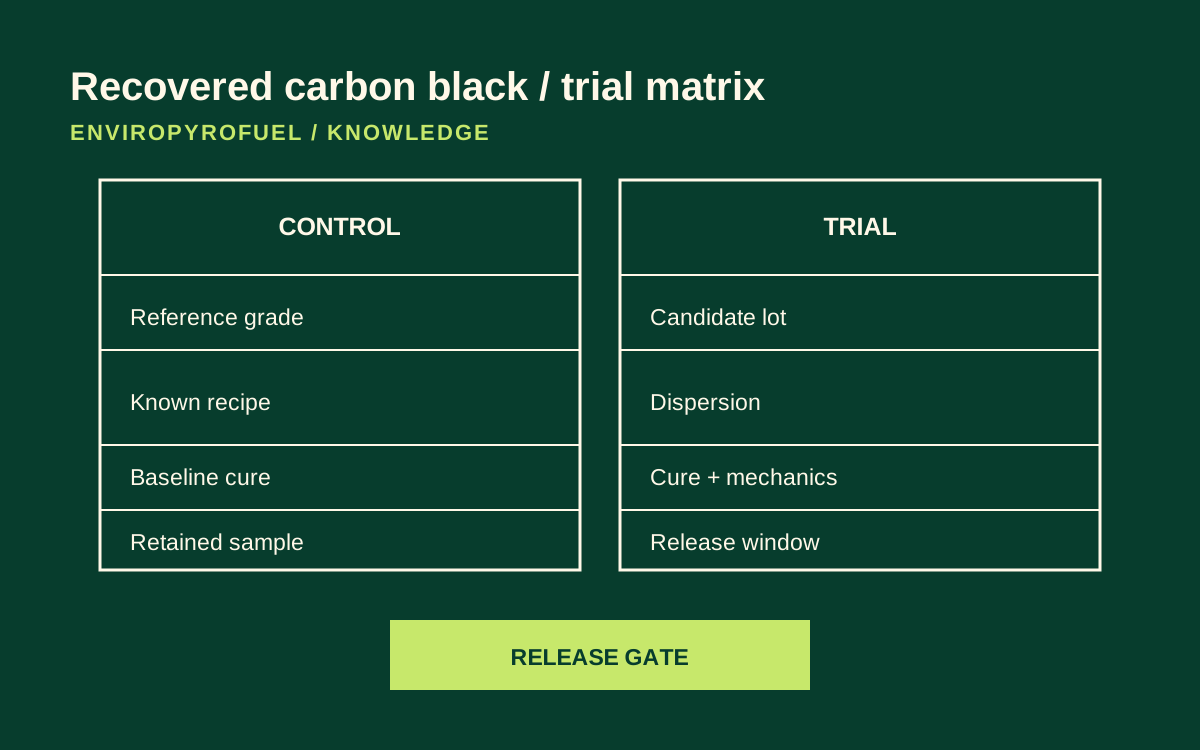
Recovered carbon black is a rubber ingredient that must earn its place in a formulation. Char colour or a carbon assay cannot establish that it will disperse, cure and reinforce rubber in a buyer's compound. The qualification record belongs to a named recipe and process window, so a result can be repeated and challenged. This keeps a promising sample separate from a production release decision. The buyer should preserve the comparison material and trial records for later lot reviews.
Define the compound job
Begin with the rubber formulation and the property that the carbon is expected to deliver. A tread compound, conveyor cover and molded seal do not ask the same questions. Record polymer, oil, curatives, loading, mixing equipment and target hardness, tensile strength, abrasion or dynamic behaviour. The material is qualified against this job, not against a vague label such as carbon substitute.
Ask whether the proposed grade is a direct replacement, a partial replacement or a filler for a new recipe. That choice changes dosage, dispersion work and the comparison sample. Keep the virgin carbon-black grade and supplier lot identified so the trial has a real reference.
Characterise the powder
The first laboratory screen should describe what arrived. Measure ash, moisture, sulphur, zinc and other relevant inorganics, volatile matter, particle or agglomerate size, surface area and structure with stated methods. Pyrolysis char can retain inorganic tyre ingredients and adsorbed organic residues. A carbon percentage alone hides those variables.
Check metal and fibre carryover, because contamination can damage mixing equipment or create defects. Record bulk density, flow and dust behaviour for the plant that will handle it. A certificate should identify the batch and method, with detection limits where they matter. Results from another process or another feed should not be silently transferred to this batch.
Test dispersion in the real mixer
Dispersion is a processing result. Run the candidate through the intended internal mixer, mill or masterbatch route at a defined loading and mixing energy. Inspect agglomerates and surface defects, and record dump temperature, torque and cycle time. A powder can look uniform in a bag and still disperse poorly under production conditions.
Compare the candidate and reference at matched formulation and processing settings before changing the recipe. If the candidate needs a different mixing sequence, document that as part of the grade's use instructions. A buyer should know the correction needed to make the compound work, and its cost in time, dust control or scrap.
Run cure and mechanical panels
Measure cure curve, scorch time and optimum cure under the compound's normal test method. Then make a panel for tensile, elongation, hardness, tear, abrasion and rebound or dynamic properties that matter to the product. Age selected specimens if the application depends on heat, oxygen or fatigue exposure. Keep specimen preparation and conditioning identical across candidates.
The result may be a useful partial replacement rather than a pass or fail. Report the loading range where performance holds and the point where it falls away. If cure changes, the formulator must decide whether a new curative balance is acceptable. The recovered material is qualified only for the tested recipe and process window.
Make the release decision
A release file links incoming batch, laboratory results, formulation, processing settings and finished-rubber performance. Include retained samples and a plan for periodic requalification when feed or process changes. Ask the supplier how ash and surface properties are controlled and what variation is expected between lots.
The sensible outcome can be approved, approved with a defined blend limit, or held for more work. A char primer or visual similarity is not enough. The decision should state the compound, loading, test methods and limits so a later buyer does not mistake one successful trial for universal performance. Keep the signed approval with the lot range and identify who may change the recipe. That control prevents a qualification result being reused after the material has changed.
Record processing behaviour alongside the final compound tests. A laboratory formulation that meets a selected property still needs to run consistently through the intended production process. Keep any recipe or mixing changes visible so the receiving team understands what was required to achieve the trial result.
| Stage | Decision evidence |
|---|---|
| Powder screen | Batch certificate and contaminants |
| Processing | Mixer record and dispersion inspection |
| Compound panel | Cure and mechanical comparison |
| Release | Recipe, range and requalification rule |
Sources and further reading
Sources support the principles discussed here. Worked examples and decision checklists are explanatory; they do not report ENVIROPYROFUEL plant performance or product specifications.
- US EPA HERO, On the characterisation of carbon black from tire pyrolysis
- US EPA HERO, Carbon black recovery from waste tire pyrolysis by demineralization
- US EPA, Markets for Scrap Tires
Apply testing, handling and operating decisions to the actual material, equipment and local requirements. A standards reference identifies a method or framework; it does not establish certification.