
BUYING AND CIRCULARITY
Material traceability and delivery records
Traceability is a chain of records that connects a feedstock decision to a delivered batch. It gives a buyer something to check when quantity, quality or identity is disputed. The record is useful only when names, quantities and handoffs stay consistent from one document to the next. That continuity is what lets a receiving team investigate a discrepancy without guessing. It also makes a disputed invoice or test result easier to isolate.
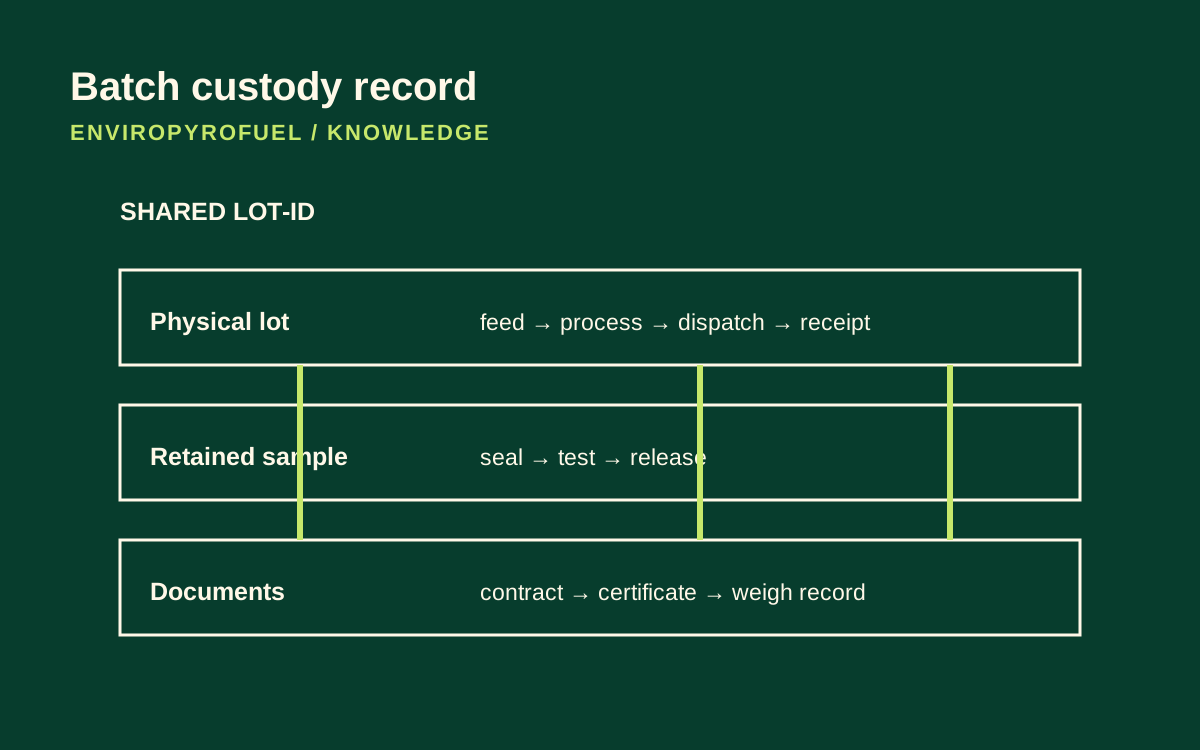
Give every batch an identity
Use a stable batch identifier at the point where accepted feed enters processing. Link it to feed description, inspection result, production dates, output quantity, storage vessel and sample labels. If material from several batches is blended, issue a new blend identity and retain the parent batch list. A delivery number can refer to a transaction; it should not replace the production identity.
The record needs defined units and measurement conditions. Moisture, temperature and tare assumptions can change the apparent mass of a liquid or solid. Write them down at the measurement point. This is physical bookkeeping, not a claim that the material meets every downstream specification.
Connect identity to the contract
The purchase contract should say what the batch certificate represents, which tests control acceptance, when title or risk changes, and how a disputed result is resolved. State the allowed tolerance, retest laboratory and time window for notice. Keep the agreed specification beside the result rather than relying on an email that may be detached from the shipment.
Record rejected, returned, reworked and blended material. A missing disposition creates a false impression that every produced kilogram became a saleable output. The record should show what happened to the quantity and who authorised it. These controls support a commercial decision; they do not establish unverified transport or legal obligations.
Record custody at handoffs
At dispatch, record batch, net mass, packaging or tank, seal, vehicle or container reference, destination and dispatch time. At receipt, record seal condition, mass, visible contamination or water, temperature where relevant, storage location and the person accepting it. Photographing a seal can help, but it does not replace the written identity and quantity.
Every handoff should preserve the same identifier. If a carrier combines loads, changes a container or transfers material, the event needs a new custody record. A buyer can then locate the point at which an anomaly appeared instead of treating the whole chain as one unexplained gap.
Keep samples and exceptions together
Retain a sealed reference sample for each agreed batch where the material and application justify it. Log sample location, seal and retention period. Link the laboratory report to the sample label, test method and result date. When a result is out of range, freeze the affected stock and record investigation, disposition and release authority.
A simple exception log is often more useful than a long dashboard. It should answer four questions: what was expected, what was observed, what quantity is affected, and what action closed the issue. The same file can support a buyer's receiving review and a producer's process investigation.
Audit the chain without overclaiming
ISO 22095 gives common chain-of-custody models and terminology, but the standard itself does not prove a product claim. The claim still needs its own specification, evidence and assurance. Decide whether the record is segregated, controlled-blend or mass-balance accounting, and state that model in plain language.
Review one delivery from feed receipt through processing, storage, dispatch and customer receipt. Reconcile mass at each point and explain losses, samples and residues. The review can establish that the file is internally consistent. It cannot by itself certify a product, guarantee compliance in a destination, or replace the parties' own contractual and regulatory checks.
For example, if one lot is split between two deliveries, assign child delivery references that retain the parent lot identity. The two dispatch records should reconcile to the quantity released, with any retained inventory shown separately. A changed vehicle number need not create a new production lot, but the handoff must remain visible.
| Record | Minimum link |
|---|---|
| Production | Batch, feed, date and output |
| Testing | Sample, method, result and report |
| Dispatch | Batch, mass, seal and destination |
| Receipt | Seal, mass, condition and storage |
| Exception | Owner, action, date, closure evidence, decision and linked correspondence |
Sources and further reading
Sources support the principles discussed here. Worked examples and decision checklists are explanatory; they do not report ENVIROPYROFUEL plant performance or product specifications.
- ISO 22095:2020 Chain of custody
- US EPA: SW-846 Chapter One, project quality assurance and quality control
- European Commission JRC: technical proposals for rules to calculate and verify recycled plastic content
Apply testing, handling and operating decisions to the actual material, equipment and local requirements. A standards reference identifies a method or framework; it does not establish certification.