BUYING AND CIRCULARITY
A buyer checklist for pyrolysis oil
A pyrolysis-oil enquiry starts with the equipment and duty the liquid must serve. Recovered oil from waste tyres is a variable hydrocarbon stream, so a buyer should define an application before asking whether a sample is suitable.
Start with the receiving system
Write down the burner, boiler, kiln or other unit that would receive the oil. Record the required heat duty, injection method, storage temperature, pump limits and fuel controls. A liquid that can be moved through one system may need different preparation for another. The question is therefore application qualification, not a universal boiler replacement.
Ask the equipment maker which properties govern acceptance. Flash point affects storage and handling; water and sediment affect stability and atomisation; viscosity affects pumping and burner settings. Density helps reconcile tank volume with mass. Sulphur, nitrogen, ash and metals can affect emissions, deposits and maintenance. These are screening questions, not a substitute for the receiving operator's own approval.
- Name the intended equipment and operating duty.
- Define the sample quantity, test laboratory and acceptance limits.
- Confirm storage, filtration, heating and emergency arrangements.
References: 1
Request a batch-linked sample
A useful sample has an identity. Ask for the production batch, collection date, feed description and storage history. A single bottle can show what was in that bottle; it cannot prove that every future delivery will match it. Agree whether the sample is representative, how it was mixed, and whether retained samples will be kept for comparison.
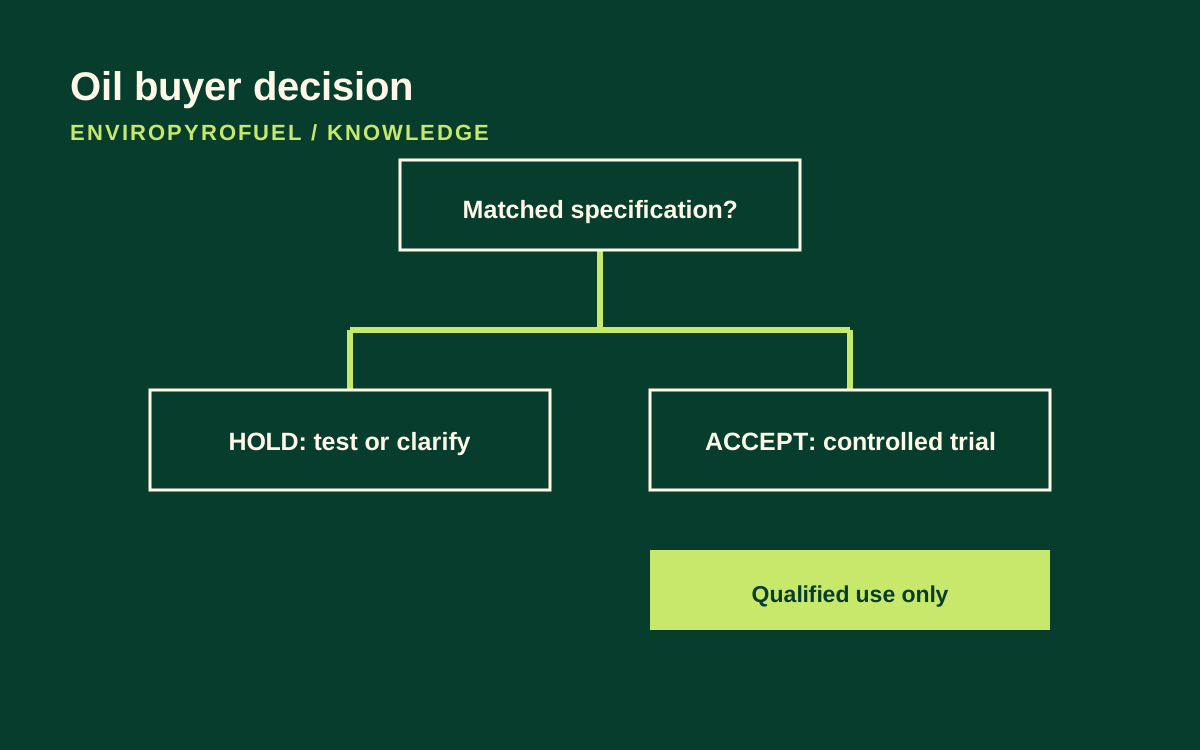
The test request should state methods and reporting units. A buyer can then compare supplier results with an independent laboratory result without arguing over whether two numbers were measured in the same way. If a result is outside the proposed range, record the disposition: reject, reprocess, blend under a controlled procedure or investigate.
Check storage and transport behaviour
Recovered oil can separate, pick up water or change viscosity during storage. Ask how the supplier prevents contamination, what tank material is compatible, and whether agitation or circulation is needed. Inspect the receiving tank, transfer hoses, strainers and bunding before the first delivery. The physical route from vehicle to burner is part of qualification.
Agree delivery documents before ordering. The batch number should appear on the certificate, sample label, invoice and receiving record. Weigh the delivery where possible and log temperature, visible water, seal condition and quantity received. These records help distinguish a material issue from a tank, transfer or measurement issue.
- Check tank capacity and temperature control.
- Define filtration and sampling at receipt.
- Record seal, mass, batch and storage condition.
References: 1
Run a controlled trial
A trial should have a short written protocol. Set the baseline fuel, operating load, burner settings, flue-gas measurements, start-up and shutdown method, and the person who can stop the trial. Keep the trial long enough to expose handling and deposit behaviour, rather than treating a clean first ignition as proof of suitability.
Compare useful output and operating observations with the baseline. Look for blocked strainers, unstable flame, pump wear, deposits, odour and changes in emissions. The result should be a decision for the named equipment and grade: accepted, accepted with controls, or not accepted. It should not become a general claim about all pyrolysis oil.
What a sound purchase brief contains
Send the supplier one brief containing application, expected quantity, delivery point, storage details, requested certificate fields, test method and trial plan. State which limits are hard stops and which can be discussed after engineering review. Ask how off-spec material is isolated and who bears the cost of additional testing.
The buyer's final file should contain the specification, report, sample identity, trial observations and approval decision. That file turns an interesting liquid into a controlled procurement decision. It also leaves room for a different answer when the equipment, feed or batch changes.
Keep the purchase brief separate from the test result. The brief states what the receiving system needs; the report records what the submitted sample contained. A signed decision then explains whether the evidence meets the brief, or identifies the remaining test before acceptance.
| Question | Evidence to request |
|---|---|
| Can the equipment use it? | Written receiving limits and operator approval |
| Does the batch match? | Certificate, sealed sample and independent test |
| Can it be handled safely? | Tank, transfer and storage procedure |
| Did the trial work? | Protocol, baseline and operating record |
Sources and further reading
Sources support the principles discussed here. Worked examples and decision checklists are explanatory; they do not report ENVIROPYROFUEL plant performance or product specifications.
- US Department of Energy: Improving Process Heating System Performance
- US EPA, Markets for Scrap Tires
- European Commission JRC review of waste treatment technologies
Apply testing, handling and operating decisions to the actual material, equipment and local requirements. A standards reference identifies a method or framework; it does not establish certification.