BUYING AND CIRCULARITY
Pyrolysis products and applications
Waste tyres yield materials with different uses and different quality requirements. This guide explains where each stream may fit, what a buyer should check, and which details to bring to a product enquiry.
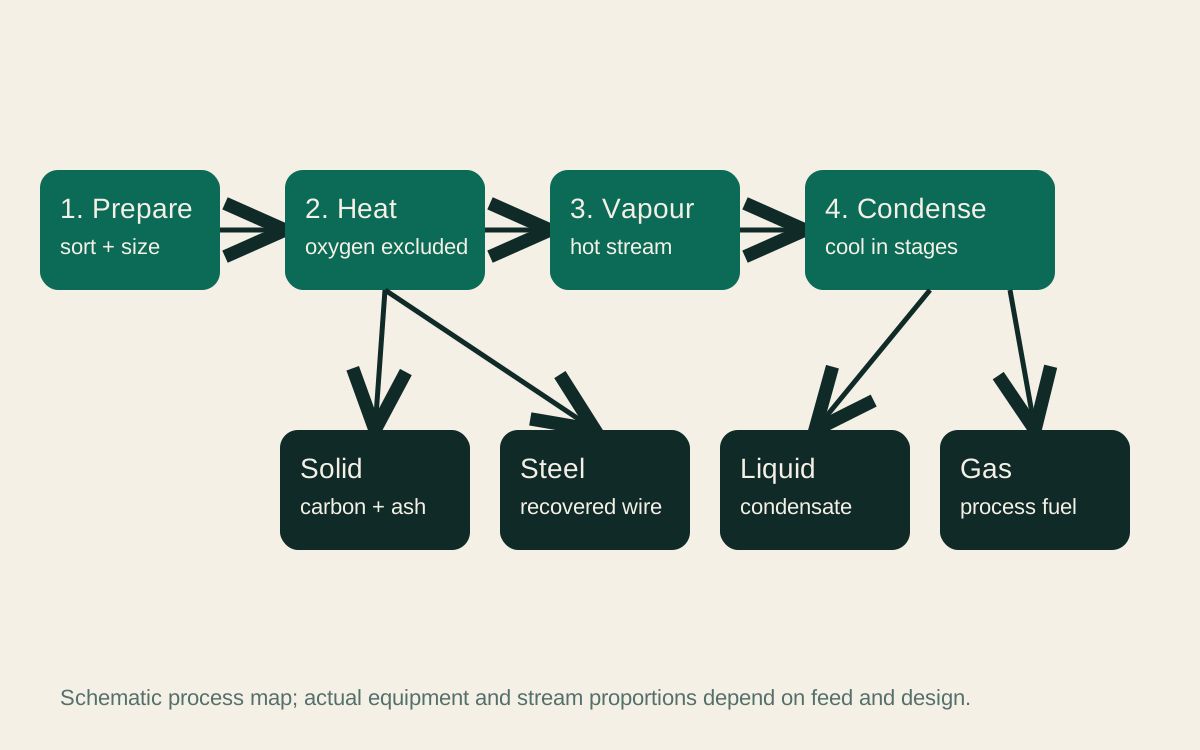
Four outputs, different destinations
Tyre pyrolysis separates the material into liquid, solid and gas streams. Steel reinforcement is also recovered. Each stream needs its own description and acceptance criteria before a buyer can judge its usefulness. A process yield alone says little about whether a material meets the intended specification.
ENVIROPYROFUEL discusses pyrolysis oil, carbon-rich material and recovered steel wire through its product enquiries. Process gas is explained here as part of the recovery system; it is not listed as a separate product for sale. Availability and suitability are confirmed for the actual lot.
| Stream | Potential route | Evidence needed first |
|---|---|---|
| Pyrolysis oil | An assessed industrial fuel or processing feedstock | Composition, handling properties and equipment suitability |
| Carbon-rich material | Further processing and qualification for a defined application | Ash, residues, particle characteristics and application trials |
| Recovered steel wire | A scrap-metal recycling route | Metal content, contamination, moisture and delivery form |
| Process gas | Heat recovery within a suitably designed plant | Gas properties, treatment, controls and an energy balance |
References: 1
Pyrolysis oil: define the application first
An oil enquiry should start with the equipment and duty: what the material will feed, how it will be stored, and which properties the receiving system requires. A high heating value on its own does not establish a suitable fuel. Ask for a representative, batch-linked sample and the agreed laboratory results.
Useful questions cover water and sediment, viscosity at a stated temperature, sulfur, flash point and the basis of the reported heating value. The buyer should agree relevant methods and acceptance limits with the equipment specialist and laboratory. Refining or other treatment may be needed for a particular route.
Be careful with a standard described simply as a pyrolysis-oil standard. ASTM D7544-23 covers liquid biofuels produced from biomass. Its name does not establish that waste-tyre oil meets that specification or is approved for the same equipment. Confirm the scope of any proposed standard before putting it into a purchase order.
Carbon-rich material: distinguish recovery from qualification
The solid recovered from tyre pyrolysis can contain carbon, inorganic material and residual organics. The processing history matters. Raw char and a processed, qualified recovered carbon black should not be presented as interchangeable products.
For a carbon enquiry, state the intended formulation or process and the properties it needs. Ask which preparation steps the offered material has actually undergone. Then agree tests and a trial that can show whether it performs in that application. A generic replacement percentage is not an adequate trial plan.
ASTM D8474 describes thermogravimetric analysis of recovered carbon black to determine organic residue, overall carbon and ash. These measurements help describe composition. Application performance still needs its own evidence.
Recovered steel wire: specify what is delivered
Tyre reinforcement can enter a metal-recycling route after recovery and separation. A useful description identifies the wire form, remaining rubber or char, moisture and how the lot will be packed or loaded. A gross weight does not establish the mass of usable metal.
Ask the receiving recycler which contaminants and delivery forms it accepts. Agree how the lot will be sampled or inspected, which weight records will be used, and how any deductions will be calculated. Record estimates as estimates until a measurement supports them.
For an initial ENVIROPYROFUEL enquiry, share the required quantity and frequency, delivery location, preferred form and any buyer specification. The team can then discuss the available material against that requirement.
References: 1
Process gas: account for the energy actually used
Gas that remains after condensation may provide process heat in a plant designed to use it. Recoverable heat depends on gas properties, treatment, burner operation and losses. Gas production alone does not prove that a plant is energy self-sufficient.
Compare useful heat delivered with the actual heat demand, and account separately for electricity and start-up fuel. This is a process-level assessment. It should not be turned into a product availability or energy-saving claim without operating records.
References: 1
Prepare a useful product enquiry
A short specification makes the next conversation more useful. Share the application, expected quantity or frequency, delivery location and the limits your process must meet. Note whether those limits come from an equipment supplier, customer specification or a trial programme.
Ask which documents are available for the offered lot. Relevant records may include a batch-linked test report, material identification, safety and handling information, and agreed delivery and weight records. Confirm that the sample, report and proposed delivery refer to the same material.
- Define the intended use and the evidence needed for acceptance.
- Agree the sample, test methods and any trial before committing to a specification.
- Confirm the lot, packing, transport and commercial terms before dispatch.
- Keep the accepted results and delivery records together so later questions can be traced to the original agreement.
Sources and further reading
Sources support the principles discussed here. Worked examples and decision checklists are explanatory; they do not report ENVIROPYROFUEL plant performance or product specifications.
- Tyre Stewardship Australia, Pyrolysis of end-of-life tyres: Review of pyrolysis technologies and product opportunities for Australia, version 1.1, 10 May 2024. General process and market context.
- ASTM International, D8474: Recovered Carbon Black—Compositional Analysis by Thermogravimetry. Composition-test scope.
- ASTM International, D7544-23: Standard Specification for Pyrolysis Liquid Biofuel. Biomass scope and intended equipment.
- ASTM International, New Recovered Carbon Black Standard, 13 February 2026. Processing and classification context.
Apply testing, handling and operating decisions to the actual material, equipment and local requirements. A standards reference identifies a method or framework; it does not establish certification.