OPERATIONS AND FEEDSTOCK
Pyrolysis energy balance: gross energy is not net energy
A pyrolysis energy balance must show which energy enters the process, which energy leaves as products, and which energy is actually available after conditioning and conversion. A gas stream has chemical energy, but it is not free energy.
Choose the account boundary
State whether the account covers only the reactor or the full system from receiving to saleable products. Include the feed's moisture, sensible heating, reaction duty, heat losses, electricity for size reduction and movement, pumps, fans, cooling, gas treatment, and flaring where they belong to the boundary. If a downstream distillation or drying step is excluded, say so.
Keep gross and net terms apart. Gross chemical energy is the heating value of a product stream. Net process energy subtracts the energy used to make that stream available, including combustion efficiency, heat transfer losses, parasitic electricity, and any imported fuel. The result is sensitive to measured flow, composition, heating value, and operating conditions.
Energy in products is also not automatically exportable. A liquid may need storage, testing, or further treatment. Gas may be diluted, intermittent, or unsuitable for a burner without controls. A balance should label these constraints rather than turning a heating value into a sales claim.
Why gas is not free
Using non-condensable gas to heat a reactor can reduce purchased fuel, but it still has a cost and an energy path. Gas must be collected, kept within safe pressure and composition limits, moved, and burned with controlled air. Recovered gas may be unavailable at start-up or during an upset; the approved design must account for those periods. The useful quantity is the heat delivered to the process after those losses, not the gas heating value at the outlet.
Published studies use different feedstocks, boundaries, and assumptions. One thermodynamic study explicitly calculates process heat requirements and the energy released by combustion of pyrolysis gas; a separate pilot study reports mass and energy balances for its own equipment. Neither result can be transplanted into another plant without checking the boundary and measurements.
Electrical energy deserves its own line. A process may be thermally self-sufficient while still importing significant electricity for shredding, conveying, cooling, controls, and product handling. Calling that operation energy independent would be inaccurate.
Example decision
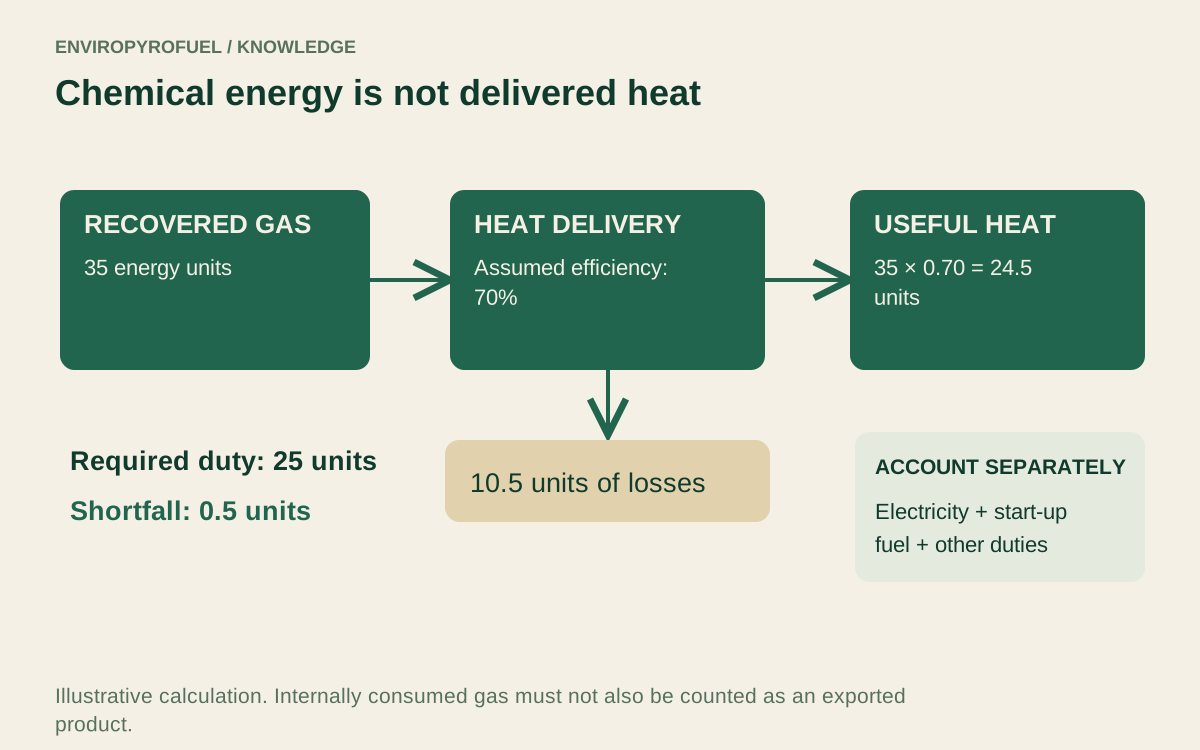
A hypothetical balance shows 100 energy units in potentially saleable products and 35 units of internally used gas. The reactor needs 25 units of delivered heat. At an assumed 70% combined conversion and transfer efficiency, that gas delivers 24.5 units: 35 multiplied by 0.70. It falls 0.5 units short of the stated duty, before any separate electricity or start-up requirement. These figures illustrate a calculation, not measured plant performance.
The takeaway is to publish gross product energy, purchased energy, internal fuel use, losses, and boundary exclusions as separate lines. A net result is a calculation with assumptions, not a property of the gas stream alone.
Separate duty from output
Measure imported fuel and electricity over the same period as product flows. Record intermediate gas inventory and start-up or flare events. A product heating value also needs its moisture basis, method, and sampling date before it enters an energy calculation. Heat recovery counts only when it is measured or calculated from declared assumptions and actually reaches the receiving duty.
Report stable operation separately from start-up, shutdown, and upset periods. Averaging those periods away can hide imported fuel that was essential to reach safe operation. State whether downstream upgrading, storage, or transport is inside the energy boundary.
Avoid counting internal gas twice
Draw an arrow for internally consumed gas from the recovery system to the heating system. If the boundary includes both, the gas is an internal transfer. Its energy can help explain reactor heating, but it cannot also be counted as exported gas. Energy actually crossing the outer boundary determines the export figure.
Use one declared heating-value basis throughout a comparison. Higher and lower heating values treat water condensation differently; switching between them can create an apparent efficiency gain. Keep electricity in a consistent energy unit, but show it separately when the decision concerns purchased power or fuel cost. A cost comparison then needs prices and a stated period as well as an energy balance.
Sources and further reading
Sources support the principles discussed here. Worked examples and decision checklists are explanatory; they do not report ENVIROPYROFUEL plant performance or product specifications.
- Thermodynamic evaluation of the energy self-sufficiency of the tyre pyrolysis process
- Demonstration of the waste tire pyrolysis process on pilot scale in a continuous auger reactor
- Mong et al.: Bioenergy Generation Potential of Empty Fruit Bunch and Waste Tire Through Microwave Pyrolysis: An Energy Balance Analysis
Apply testing, handling and operating decisions to the actual material, equipment and local requirements. A standards reference identifies a method or framework; it does not establish certification.