BUYING AND CIRCULARITY
Evaluating evidence for pyrolysis technology
A vendor trial becomes useful when another engineer can see what was fed, what was measured and what happened when the run went wrong. A brochure or one successful sample cannot answer those questions. The buyer also needs evidence about the supplied equipment, acceptance tests, data access and support after handover. The evidence request should produce a file that procurement, operations and quality teams can all inspect.
Ask what the vendor is supplying
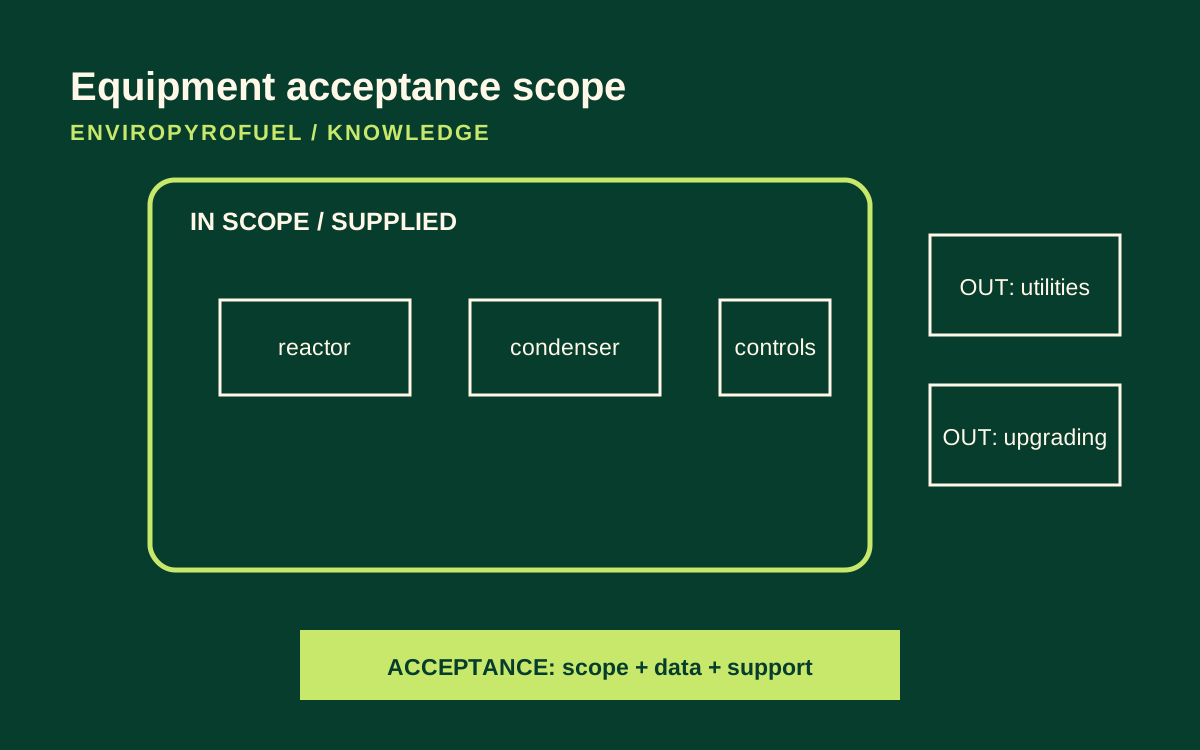
Request the feed definition first: whole or prepared tyres, passenger or truck mix, moisture, textile and steel content, contamination and batch size. Then list the equipment included in the offer: feed preparation, reactor, vapour handling, condensers, gas treatment, solids separation, steel recovery, controls, utilities and storage interfaces. A result from a narrow feed does not establish the scope of the supplied plant.
The trial record should identify reactor type, heating method, temperature profile, residence time, pressure, inert-gas use, feed rate and operating hours. Ask which instruments are included, their calibration records, and which data the buyer receives in raw form. Record start-up, shutdown and interruptions so the acceptance test covers the complete supplied system.
Demand a closed mass and energy picture
A useful report reconciles feed mass to gas, liquid, solid, steel, moisture, samples and unaccounted loss. Define whether yields are wet or dry and whether steel is included in the denominator. Report internal gas use and external energy input separately. If the balance does not close, show the gap and its likely measurement cause.
Energy evidence should include fuel, electricity, heat recovery and parasitic loads for the stated operating window. The purpose is to understand the process, not to manufacture an investment return. A pilot balance can identify missing measurements; it cannot by itself predict a supplier's annual economics.
Match each output to a test
For oil, request water, solids, density, viscosity, flash point, sulphur, nitrogen, ash and a compositional screen suited to the proposed use. For carbon-rich solids, request ash, metals, surface properties, particle behaviour and rubber-compounding results when that market is proposed. For steel, request cleanliness, non-metal content and the buyer's acceptance test.
Every result needs a sample identity, method, laboratory and date. Ask whether samples were composite or grab samples and how they were stored. A product name does not replace a specification. If the vendor has only visual inspection or a single assay, mark the evidence as early-stage and keep the use claim narrow.
Check support, access and references
Ask for the consumables list, planned maintenance intervals, critical spare parts, cleaning method and expected operator training. Clarify who diagnoses alarms, who supplies replacement instruments and how quickly technical support responds. These details affect whether a good trial can be repeated by the operating team after handover.
Request customer references for comparable feed and duty, with permission to ask about uptime, off-spec handling, data access and maintenance burden. Check whether the vendor will provide operating logs, calibration records and change notices. A witnessed demonstration can answer questions about one run; a reference check tests what ownership has been like over time.
Agree the acceptance test
Turn the evidence request into contract gates: feed acceptance, stable operation, closed balance, output specification, data delivery, safety interlocks and operator training. Each gate should have a pass condition, measurement method, witness and remedy. Define what happens to off-spec material and which unresolved items block handover.
This article is a technical evidence checklist. It does not recommend a supplier or provide an investment return. A buyer should combine the trial record with site engineering, contracts, safety review, finance and any required approvals through the people responsible for those decisions. The final acceptance file should include signed results, open actions, spare-parts list and the agreed support contact.
List the equipment and services supplied by the buyer beside those supplied by the vendor. A cooling-water connection, electrical supply or downstream finishing step can be outside the quoted scope while remaining essential to the acceptance test. Resolve those interfaces before deciding which performance obligations the equipment price includes.
| Gate | Evidence |
|---|---|
| Feed | Composition, preparation and quantity |
| Operation | Logs, interruptions and maintenance |
| Balance | Mass and energy reconciliation |
| Products | Batch-linked tests and acceptance limits |
| Handover | Data, training, spares and open actions |
| Change control | Owner, trigger, record and buyer notification |
Sources and further reading
Sources support the principles discussed here. Worked examples and decision checklists are explanatory; they do not report ENVIROPYROFUEL plant performance or product specifications.
- US EPA, Chemical Reclamation of Scrap Rubber
- US EPA HERO, influence of tire formulation on continuous pyrolysis products
- GHG Protocol Product Life Cycle Accounting Standard
Apply testing, handling and operating decisions to the actual material, equipment and local requirements. A standards reference identifies a method or framework; it does not establish certification.