BUYING AND CIRCULARITY
Circularity and mass-balance claims
A mass balance is an accounting method for assigning specified characteristics across a defined process. It does not mean that every molecule in a named product was physically separated from conventional material. The claim must identify the eligible input, accounting period and assignment rule. A clear statement lets a customer understand the accounting boundary before relying on it. That distinction matters when a physical delivery and an attributed claim appear in the same contract.
Name the claim precisely
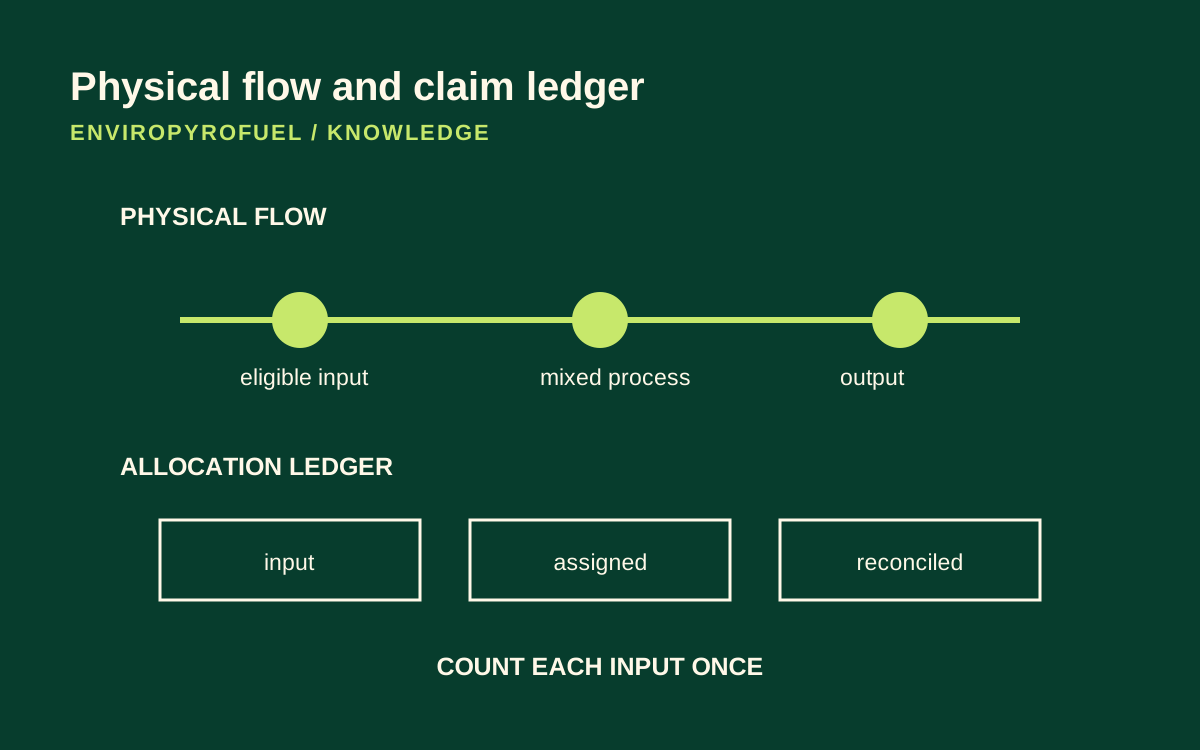
Start by saying what is being claimed: waste tyre feed received, recovered material physically delivered, or recycled content attributed to a product. These are different statements. Physical segregation can link a named batch to a named output. Controlled blending preserves a defined input mix. Mass balance permits mixing while reconciling the amount of specified input and assigned output within stated rules.
Use the chain-of-custody model in the certificate and customer copy. ISO 22095 describes models and terminology, but it does not establish the product's characteristics on its own. The product specification, measurement point, assurance and allocation rule still need to be stated.
Build the ledger at one measurement point
A useful ledger lists waste feedstock, virgin feedstock and co-materials separately. Outputs should distinguish saleable recovered materials, intermediates, energy recovered and residues. Use consistent mass basis and account for moisture, sampling, storage change and process loss. The ledger period and process boundary should be fixed before credits are assigned.
For a simple example, a process receives 100 tonnes of accepted waste feed and 20 tonnes of virgin co-feed. If the rule allows only the waste contribution to create a recycled attribute, the 20 tonnes cannot be counted as recycled input. The output allocation must reconcile to the eligible input and the stated conversion or yield rule. The arithmetic is only as credible as the boundary and measurements.
Do not count the same benefit twice
A recovered oil output cannot receive a recycled-content attribute and also be counted as the full avoided virgin fuel benefit without explaining the separate accounting frameworks. Likewise, a plant cannot assign the same eligible input to two customers or claim the same tonne as both material recycling and energy recovery. Keep claims attached to a quantity, period, destination and rule.
Reconcile opening balance, eligible input, assignments, losses and closing balance. Investigate negative balances, unexplained carryover or output claims larger than eligible input. A spreadsheet that balances after manual overrides needs a review trail for the override and the person who approved it.
Make physical and accounting evidence visible
A buyer should be able to tell whether the delivered material is physically recovered, physically mixed, or an attributed quantity under mass balance. State where the physical material enters the process, where the attribute is measured, and whether an independent party checks the ledger. Do not use a mass-balance certificate to imply a composition that the model does not promise.
The European Commission's recycling work also stresses consistent input and output units and clear treatment of multi-output processes. Those details are mundane but decisive. A claim becomes reviewable when another person can follow the quantity from source to assignment without inventing missing links.
References: 2
Write the customer statement around evidence
A careful statement names the material, accounting period, chain-of-custody model, measurement point and verification basis. It can say that a defined amount of eligible waste input was allocated under a mass-balance rule. It should not imply automatic carbon savings, physical presence in every product or regulatory acceptance in every market.
Keep the claim separate from a life-cycle result. A mass balance proves an accounting reconciliation; an LCA estimates impacts under a functional unit and boundary. Both may inform a decision, but neither should silently stand in for the other.
A useful final check is to follow one claim backwards through the ledger. Identify the output quantity, the period, the eligible input and each conversion adjustment. If two customer statements rely on the same available allocation, reconcile them before either statement is issued.
| Evidence | Question answered |
|---|---|
| Batch and weighbridge record | What physically entered or left? |
| Mass-balance ledger | What quantity was eligible and assigned? |
| Custody model | How is the attribute linked? |
| Verification report | Who checked the stated rule? |
| Claim owner | Who approves wording, period and evidence file? |
Sources and further reading
Sources support the principles discussed here. Worked examples and decision checklists are explanatory; they do not report ENVIROPYROFUEL plant performance or product specifications.
- ISO 22095:2020 Chain of custody
- European Commission JRC: technical proposals for rules to calculate and verify recycled plastic content
- European Commission, US-EU workshop on recycling standards and definitions
Apply testing, handling and operating decisions to the actual material, equipment and local requirements. A standards reference identifies a method or framework; it does not establish certification.